
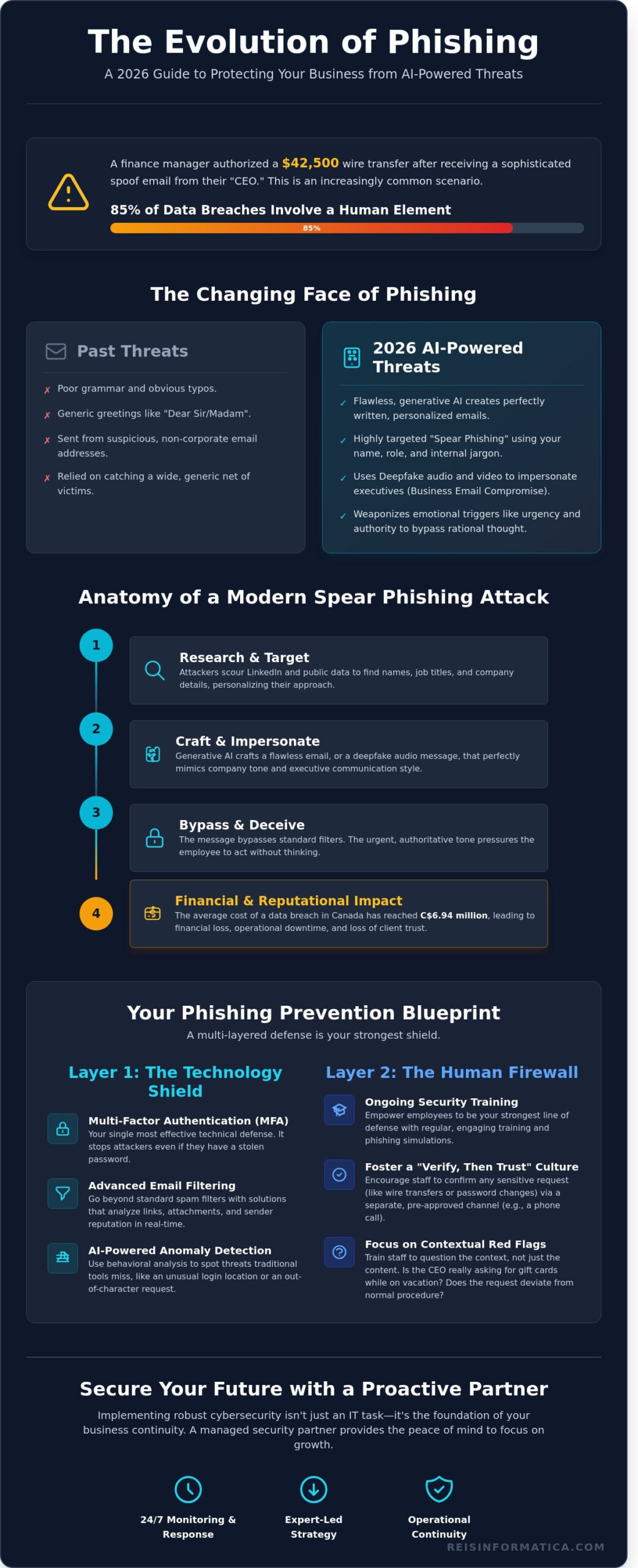
On a Tuesday in January 2026, a finance manager at a mid-sized Chicago firm authorized a US$42,500 wire transfer after receiving what looked like an urgent request from their CEO. The email was a sophisticated spoof; by the time the error was caught, the funds had vanished. It’s a scenario that happens more often than you might think, as 85 percent of US data breaches now involve some form of social engineering. Implementing effective phishing prevention best practices is no longer just an IT task; it’s a fundamental pillar of your business’s financial stability.
You probably agree that your employees shouldn’t need a computer science degree to keep your company safe. It’s frustrating to manage security training when your team is spread across offices in New York, Chicago, and Los Angeles. We promise to simplify this complexity by providing a master checklist that shields your US business from these evolving threats using expert-backed strategies. This guide offers a clear, actionable roadmap to reduce human error and give you the peace of mind that your infrastructure is truly secure.
Key Takeaways
- Learn how AI-driven scams and deepfake technology are evolving, making it harder for Canadian businesses to spot sophisticated social engineering tactics.
- Master the essential checklist of phishing prevention best practices to shield your corporate accounts with Multi-Factor Authentication and advanced filtering.
- Discover how to build a “human firewall” by empowering your team with ongoing training that turns employees into your strongest line of defense.
- Understand why moving to a proactive managed security model is the key to ensuring operational continuity and peace of mind for your business.
- Explore how behavioral analysis technology identifies sophisticated threats that traditional security tools miss, keeping your Canadian infrastructure safe.
Understanding the Phishing Threat in Canada’s Business Hubs
Phishing is a deceptive social engineering tactic where criminals impersonate trusted sources to steal sensitive Canadian corporate data. While many think of it as just a “bad email,” What is phishing? really describes a psychological game designed to bypass your technical defenses. In Canada’s tech corridors like Kitchener, Waterloo, and Toronto, these threats are evolving rapidly as we head into 2026. Hackers are moving beyond generic templates, using localized data to craft messages that look identical to a legitimate request from a vendor or a government agency.
For a firm in Mississauga or Calgary, the financial hit of a successful attack is staggering. The average cost of a data breach in Canada reached C$6.94 million in 2023, and that number continues to climb. Relying solely on a standard antivirus program is no longer a complete defense strategy. While software can catch known malware, it often fails against the human-centric manipulation found in modern phishing prevention best practices.
Why Phishing is Personal in 2026
Generic scams are being replaced by “Spear Phishing,” a targeted approach where the attacker knows your name and your specific role. Imagine an office manager in Milton receiving an email that looks exactly like a late notice from a local utility company. It mentions a specific street address and uses an urgent tone to demand immediate payment. These hackers spend hours researching companies in Kingston or Milton on LinkedIn to find the right names and job titles. They weaponize emotional triggers like fear and authority, making you feel like your business will face a lawsuit if you don’t click that link immediately.
The Impact on Your Business Continuity
A successful breach creates a ripple effect that goes far beyond a single stolen password. If your client data is exposed in Halifax or Ottawa, the loss of trust can be permanent. Security isn’t just about locking doors; it’s about the tranquility of knowing your operations won’t grind to a halt on a Tuesday morning. Implementing robust cybersecurity services provides the foundation for this peace of mind. By focusing on phishing prevention best practices, you protect your revenue and your reputation simultaneously. You deserve to focus on your growth while a vigilant partner handles the invisible threats lurking in your inbox.
The Evolution of Scams: AI and Social Engineering
The days of spotting a scam by its poor grammar and awkward phrasing are over. By 2026, generative AI has enabled hackers to create flawless, highly personalized emails that mirror your company’s specific brand voice and internal jargon. These messages don’t just look real; they’re often indistinguishable from legitimate memos sent by your HR or IT departments. This shift means that the traditional advice to “check for typos” is now dangerously outdated and provides a false sense of security to your employees.
Cybercriminals have also moved beyond text. We’re seeing a rise in “Deepfake” audio and video used in business email compromise. A Toronto branch manager might receive a voice note that sounds exactly like their CFO, requesting an immediate change to vendor payment details. To counter these sophisticated threats, businesses are turning to AI business solutions that use machine learning to detect patterns and anomalies that the human eye simply cannot see.
Spotting the Unspottable
Since technical errors are disappearing, your team’s defense must pivot toward identifying behavioral red flags. You should train your staff to question the context of a message rather than its appearance. For instance, if a request for an “urgent wire transfer” of C$45,000 arrives from a CEO who is currently attending a conference in Calgary, it should trigger an immediate secondary verification. Even if the email looks perfect, the deviation from established financial protocols is the real warning sign.
Encourage a culture of “verify then trust” across all your office locations. This means confirming any sensitive request through a separate, pre-approved communication channel. Implementing these cybersecurity best practices ensures that your human firewall is just as resilient as your technical one.
How Hackers Bypass Standard Filters
Modern scams often bypass traditional security layers by using legitimate cloud services to host fake login pages. Because the phishing link points to a trusted domain like Azure or AWS, many standard filters mark the email as safe. Attackers also utilize “MFA Fatigue” tactics, where they bombard a user’s phone with dozens of login approval prompts at 3:00 AM, hoping the exhausted employee will click “Approve” just to stop the notifications. AI-driven phishing is the primary threat to Canadian SMEs in 2026.
Staying protected requires a layered approach that combines advanced filtering with ongoing employee awareness. Understanding these evolving tactics is a cornerstone of phishing prevention best practices for any growing firm. If you want to ensure your infrastructure is truly resilient, consider a professional security audit to identify and close hidden gaps in your defense.
Your Phishing Prevention Checklist: 5 Essential Best Practices
Securing your Toronto business against modern cyber threats requires more than just a strong password. Current data from the Canadian Centre for Cyber Security suggests that phishing remains the most common entry point for ransomware. To protect your revenue and reputation, you need a proactive strategy. These phishing prevention best practices create a multi-layered defense that stops attacks before they reach an inbox.
- Implement Multi-Factor Authentication (MFA): Apply this to every corporate account without exception. Microsoft research indicates MFA blocks 99.9% of automated account takeover attempts.
- Deploy Advanced Email Filtering: Standard blacklists aren’t enough. Use tools that employ behavioral analysis to spot “urgent” language or unusual sender patterns that bypass traditional filters.
- Verify Domain Protocols: Configure DMARC, SPF, and DKIM. These technical “handshakes” prove to receiving servers that your email is legitimate, preventing hackers from spoofing your business domain.
- Establish a No-Blame Culture: Whether your team is in Toronto or London, employees shouldn’t fear termination for reporting a mistake. Rapid reporting reduces the average cost of a breach, which hit C$6.94 million in Canada in 2023.
- Conduct Automated Simulations: Run monthly tests to keep your team vigilant. Organizations that use regular simulations often see click rates drop from 30% to below 5% within a single year.
Technical Safeguards for the Modern Office
MFA is your first line of defense. Think of it as something you know, like your password, plus something you have, such as a physical token or a code on your phone. Even if a hacker steals your credentials, they can’t get past that second step. We also recommend DNS filtering. This technology acts as a safety net by blocking your team from reaching known malicious websites, even if they accidentally click a suspicious link. Professional managed IT services handle these technical layers for you, ensuring your protection is always active and updated without distracting your team from their core work.
Policy and Protocol Best Practices
Technology alone won’t stop a determined attacker. You need clear internal rules to guide your staff. We suggest a “Two-Person” rule for any financial transaction over C$2,500. This requires a verbal confirmation or a second digital signature before money moves. Your team also needs a simple incident response plan. If someone clicks a link, they should immediately disconnect from the Wi-Fi and notify IT. Finally, keep all software updated. Patching vulnerabilities within 48 hours of a release prevents hackers from using known exploits to bypass your security. These phishing prevention best practices ensure your infrastructure remains stable and your data stays private.
Building a Human Firewall in Kitchener, Waterloo, and Beyond
Your staff represents either your strongest shield or your most significant vulnerability. In high-growth tech hubs like Kitchener and Waterloo, cybercriminals know your team is busy and potentially distracted. A single annual seminar won’t protect your assets. Research from the 2023 IBM Cost of a Data Breach Report shows that Canadian organizations pay an average of C$6.94 million per incident. This makes consistent, bite-sized education a financial necessity rather than just an IT checkbox.
For businesses with distributed teams in Mississauga or Ottawa, security must feel invisible. It shouldn’t hinder productivity or create friction. We focus on making phishing prevention best practices a natural part of the workday. When security tools work quietly in the background, your team can focus on their core tasks without feeling overwhelmed by technical hurdles.
Training That Actually Sticks
Effective training uses gamification to keep people engaged. We recommend using “positive reinforcement” for employees who report suspicious emails. Instead of punishing mistakes, reward the vigilance that keeps the company safe. If a request feels off, your team should verify it via a secondary channel. A quick 30-second phone call can prevent a massive financial loss. For example, in early 2024, many Ontario businesses reported receiving highly realistic fake invoices mimicking local utility providers like Enbridge or Hydro One. These scams often bypass automated filters, leaving your “human firewall” as the only line of defense.
The Role of Leadership in Cybersecurity
Executives in Toronto or Calgary are frequently targeted through “whaling” attacks. These are high-stakes phishing attempts designed to trick C-suite leaders into authorizing large wire transfers or revealing trade secrets. A culture of security starts with the business owner. When leadership follows the same phishing prevention best practices they expect from their staff, it sets a standard for the entire organization. A human firewall is built on consistent education, not fear. By treating cybersecurity as a shared responsibility, you empower every person in your office to act as a guardian of your digital infrastructure.
Ready to strengthen your team’s defenses? Explore our cybersecurity services to start building your human firewall today.
How a Managed Partner Secures Your Business Future
Many Toronto business owners still rely on the outdated break-fix model. This reactive approach means waiting for a system failure or a breach before calling for help. In 2023, IBM reported that the average cost of a data breach for Canadian organizations hit C$6.94 million. You can’t afford to be a statistic. Reis Informática shifts this dynamic by acting as a vigilant guardian for your Canadian infrastructure. We move you away from chaos and toward a state of constant, quiet protection.
Proactive Monitoring vs. Reactive Repair
Think about the peace of mind that comes with 24/7 monitoring. While you sleep, our systems are actively hunting for anomalies and applying phishing prevention best practices to your network. This proactive stance transforms technology from a source of stress into an invisible engine for your growth. We reduce the complexity of your IT environment; you don’t need to understand every technical layer to know you’re safe. By choosing a strategic partner, you’re investing in long-term stability rather than just putting out fires. Our team understands the specific economic pressures in cities like Kingston and Milton. This ensures your managed IT services align with local business realities and regulations.
Taking the Next Step Toward Security
Your journey toward a secure future starts with a clear picture of where you stand right now. A professional security audit reveals the hidden vulnerabilities that hackers love to exploit. We believe technology should be efficient and invisible; it should simply work so you can focus on your core business goals. Our commitment is to provide a tailored strategy that fits your specific city and industry. Don’t wait for a suspicious link to compromise your data. Reach out for a consultation today. Let us handle the threats while you lead your company to its next milestone. Our cybersecurity services are designed to keep your Canadian business resilient, compliant, and competitive.
Protect Your Canadian Enterprise From Modern Cyber Threats
The digital landscape in Canada is shifting rapidly. With the Canadian Anti-Fraud Centre reporting over 63,000 cases of fraud in recent cycles, your business can’t afford to take a reactive stance. You’ve seen how modern security requires more than just basic software; it demands a robust human firewall and AI-resistant protocols. By adopting these phishing prevention best practices, you’re shielding your company from the average C$9.48 million cost of a data breach identified in IBM’s 2024 Cost of a Data Breach Report. This isn’t just about IT; it’s about the long-term survival of your operations in Toronto, Calgary, and across the provinces.
Reis Informática makes this complex transition simple for non-technical owners. We provide proactive 24/7 monitoring and expert support across Ontario, Alberta, and Nova Scotia. Our consultative approach ensures your team stays focused on growth while we handle the digital gatekeeping. You deserve the peace of mind that comes from a truly secure infrastructure that works silently in the background. Let’s make your business’s security a competitive advantage instead of a source of stress. Your team is your greatest asset, and with the right partner, they’ll be your strongest defense.
Secure your Canadian business infrastructure with Reis Informática today and take the first step toward a worry-free digital future.
Frequently Asked Questions
What is the most common phishing attack in Canada for 2026?
AI-driven Business Email Compromise (BEC) is the most prevalent threat facing Canadian organizations in 2026. These attacks use sophisticated language models to mimic the writing style of executives or trusted vendors. Recent data from the Canadian Centre for Cyber Security shows that 42% of financial losses in the corporate sector now stem from these hyper-personalized scams.
Can a small business in a city like Milton really be a target for hackers?
Yes, small businesses in Milton are frequent targets because hackers often view them as easier entry points into larger supply chains. The 2024 Canadian Federation of Independent Business report found that 62% of small enterprises faced a cyberattack last year. Since Milton’s commercial sector grew by 4.5% recently, local firms are increasingly on the radar of international cybercriminals looking for vulnerable networks.
How do I know if an email that looks like it is from my bank is actually a scam?
You can verify a bank email by checking the sender’s actual address and looking for generic greetings instead of your full name. Real institutions like RBC or TD won’t ask you to provide your PIN or password through a digital link. If the email creates a sense of urgency by claiming your account will be frozen within 24 hours, it’s a red flag. Always log in directly through the official app rather than using provided links.
Is Multi-Factor Authentication (MFA) enough to stop all phishing attempts?
While MFA is a core part of phishing prevention best practices, it isn’t a silver bullet. Sophisticated “Man-in-the-Middle” attacks can now bypass standard SMS codes by intercepting session tokens in real-time. Your business needs to combine MFA with hardware security keys or biometrics to ensure a 99.9% protection rate against automated credential theft and session hijacking.
What should an employee do immediately after clicking a suspicious link?
You must immediately disconnect the device from the Wi-Fi or Ethernet network to stop the spread of potential malware. Once offline, notify your IT department or a specialized partner like Reis Informática to begin a professional incident response protocol. Change your primary passwords from a different, uninfected device to secure your accounts before the attacker can use any stolen credentials.
How often should my team in Toronto or Calgary undergo cybersecurity training?
Your teams in Toronto or Calgary should undergo cybersecurity training at least once every 90 days to stay ahead of evolving threats. Annual sessions are no longer effective because 94% of malware is delivered via email, and tactics change monthly. Frequent, bite-sized simulations ensure that staying vigilant becomes a natural part of your company culture rather than a chore.
Is there a way to automate phishing prevention for my business?
You can automate your defense using AI-powered email filtering systems that scan incoming messages for malicious patterns in real-time. These tools typically cost between C$4 and C$8 per user monthly and block 99% of phishing attempts before they reach an employee inbox. Implementing these phishing prevention best practices allows your leadership team to focus on growth while the technology acts as a 24/7 guardian.