
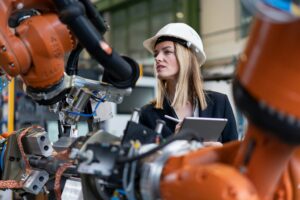
Streamlining manufacturing processes is vital for success in a competitive market. Discover how expert-managed IT services can enhance efficiency and boost productivity.
The Importance of IT in Modern Manufacturing
In the contemporary manufacturing landscape, information technology (IT) has become indispensable. As manufacturers strive to remain competitive and meet global market demands, integrating advanced IT systems into their operations is no longer a luxury but a necessity. IT solutions in manufacturing can enhance nearly every aspect of the production process, from supply chain management to quality control, thus driving efficiency and productivity.
The role of IT in this sector is multifaceted. IT can streamline cross-departmental communication, automate repetitive tasks, and provide real-time data analytics to inform decision-making. This level of integration ensures that manufacturers can respond swiftly to market changes, optimize resource allocation, and reduce waste. Furthermore, IT systems enable better coordination with suppliers and customers, improving overall agility and responsiveness in the manufacturing process.
Moreover, IT enables manufacturers to adopt cutting-edge technologies such as the Internet of Things (IoT), artificial intelligence (AI), and machine learning. These technologies can predict maintenance needs, enhance product quality, and even innovate new production methods. As a result, manufacturers who leverage IT effectively can stay ahead of the curve, ensuring long-term success and sustainability in a highly competitive environment.
Key Benefits of Managed IT Services for Manufacturers
Managed IT services offer numerous benefits for manufacturers aiming to optimise their operations. One primary advantage is cost savings. By outsourcing IT management to experts, manufacturers can reduce the need for an in-house IT team, cutting labour costs and overheads. Managed IT services also ensure that manufacturers only pay for the services they require, enabling better budget control and financial predictability.
Another major benefit is access to specialised expertise. Managed IT service providers bring extensive knowledge and experience, offering solutions tailored to the unique needs of the manufacturing sector. This expertise can assist manufacturers in implementing the latest technologies and best practices, ensuring their IT infrastructure is robust, secure, and efficient. Additionally, managed IT services deliver continuous monitoring and support, minimising downtime and ensuring any issues are swiftly resolved.
Scalability is also a significant advantage. As manufacturing businesses grow and evolve, their IT requirements change. Managed IT services can easily scale up or down to meet these needs, providing the flexibility necessary to adapt to new challenges and opportunities. This scalability allows manufacturers to remain agile and responsive, regardless of market fluctuations or shifts in production demand.
Common IT Challenges Faced by Manufacturing Companies
Manufacturing companies often face a unique set of IT challenges that can hinder their productivity and efficiency. One of the most urgent issues is integrating legacy systems with modern technologies. Many manufacturers still rely on outdated IT infrastructure, which can be costly and difficult to upgrade. This lack of integration can create data silos, decrease efficiency, and increase susceptibility to cyber threats. Another common challenge is managing a diverse IT environment. Manufacturing operations usually involve a wide array of hardware and software, from enterprise resource planning (ERP) systems to shop floor machinery. Ensuring all these components work smoothly together requires considerable expertise and resources. Without proper management, manufacturers may encounter frequent system failures, data inaccuracies, and operational disruptions. Cybersecurity is also a vital concern for manufacturers. As the industry becomes more digital, the risk of cyberattacks rises. Manufacturing companies are often targeted by cybercriminals aiming to steal intellectual property, disrupt operations, or demand ransom. Protecting against these threats demands a robust cybersecurity strategy, which can be hard to implement and sustain without specialised knowledge and resources.
How Managed IT Services Improve Operational Efficiency
Managed IT services can significantly enhance operational efficiency in the manufacturing sector by providing comprehensive support and expertise. One of the primary ways they achieve this is through proactive maintenance and monitoring. Managed IT service providers use advanced tools and techniques to continuously monitor IT systems, identifying potential issues before they escalate into major problems. This proactive approach minimizes downtime and ensures that manufacturing processes run smoothly and efficiently.
Another way managed IT services improve efficiency is by automating routine tasks. Many manufacturing processes involve repetitive tasks that can be time-consuming and prone to human error. Managed IT service providers can implement automation solutions that streamline these tasks, freeing up employees to focus on more strategic activities. Automation can also improve accuracy and consistency, leading to higher-quality products and reduced waste.
Managed IT services also enhance efficiency by providing real-time data analytics and insights. By leveraging advanced analytics tools, manufacturers can gain valuable insights into their operations, identify bottlenecks, and make data-driven decisions to optimize performance. These insights can help manufacturers improve production schedules, optimize resource allocation, and reduce lead times, ultimately boosting overall efficiency and productivity.
Cybersecurity Considerations for Manufacturing IT
In today’s digital era, cybersecurity is an essential concern for manufacturing firms. The increase in cyber threats, combined with the growing dependence on digital technologies, makes it crucial for manufacturers to adopt strong cybersecurity measures. One key priority is safeguarding sensitive data, such as intellectual property and customer details, from unauthorised access and theft. This involves deploying strong encryption, access controls, and data loss prevention strategies.
Another vital aspect of cybersecurity is defending against ransomware and other malware types. Cybercriminals often target manufacturing companies with ransomware attacks, aiming to disrupt operations and extort money. To reduce this risk, manufacturers need comprehensive backup and disaster recovery plans, along with robust endpoint protection and network security strategies. Regular security evaluations and vulnerability scans can also help detect and fix potential weaknesses in the IT infrastructure.
Employee awareness and training are also vital elements of a complete cybersecurity approach. Human mistakes are among the main causes of security breaches, so it’s crucial for manufacturers to educate their staff on best cybersecurity practices. This includes training on how to spot phishing attempts, the importance of strong passwords, and the correct handling of sensitive information. By cultivating a culture of security awareness, manufacturers can significantly lower the likelihood of cyber incidents.
Integrating IoT and Smart Technologies with Managed IT
The integration of IoT and smart technologies with managed IT services is transforming the manufacturing industry. IoT devices, such as sensors and connected machinery, can collect large volumes of data in real-time, offering valuable insights into production processes. Managed IT service providers can assist manufacturers in harnessing this data, using advanced analytics to optimise operations, enhance product quality, and minimise downtime.
One of the main advantages of integrating IoT with managed IT is predictive maintenance. IoT sensors can monitor machinery and equipment, identifying signs of wear and tear before failures occur. Managed IT service providers can analyse this data to determine when maintenance is required, allowing manufacturers to schedule repairs proactively and avoid costly downtime. This predictive approach not only extends equipment lifespan but also boosts overall efficiency and productivity.
Smart technologies such as AI and machine learning also play a vital role in contemporary manufacturing. These technologies can analyse complex data sets, detecting patterns and trends that may not be obvious to human operators. Managed IT service providers can implement AI-driven solutions to optimise production schedules, improve quality control, and even develop new manufacturing processes. By leveraging the power of smart technologies, manufacturers can remain competitive and foster innovation in their operations.
Choosing the Right Managed IT Service Provider
Choosing the right managed IT service provider is a crucial decision for manufacturing companies. The right provider can significantly impact the efficiency, security, and overall success of manufacturing operations. One of the first considerations when selecting a provider is their experience and expertise in the manufacturing sector. A provider with a deep understanding of manufacturing’s unique challenges and needs will be better equipped to deliver tailored solutions that meet the business’s specific requirements.
Another essential factor is the range of services the provider offers. Manufacturers should seek a provider that provides comprehensive IT services, including network management, cybersecurity, data backup, and disaster recovery. It’s also advantageous to select a provider that offers advanced solutions, such as IoT integration and AI-driven analytics, to support the implementation of cutting-edge technologies. The ability to scale services up or down as needed is also vital, ensuring that the IT infrastructure can grow and evolve with the business.
Finally, manufacturers should evaluate the provider’s approach to customer support and service delivery. A dependable managed IT service provider will provide proactive monitoring and maintenance, ensuring potential issues are addressed before they impact operations. They should also offer responsive and knowledgeable support, with a dedicated team available to assist with any IT-related concerns. By choosing a provider that prioritizes customer satisfaction and delivers excellent service, manufacturers can ensure their IT infrastructure remains in capable hands.
Case Studies: Successful Manufacturing IT Transformations
Several manufacturing companies have successfully transformed their operations with managed IT services. One such example is a mid-sized automotive parts manufacturer that struggled with outdated IT systems and frequent production delays. By partnering with a managed IT service provider, the company modernized its IT infrastructure, implemented IoT sensors for real-time monitoring, and adopted predictive maintenance practices. As a result, the company experienced a significant reduction in downtime, improved production efficiency, and better product quality.
Another case study involves a large electronics manufacturer that faced challenges with data security and compliance. The company engaged a managed IT service provider to conduct a comprehensive security assessment and implement robust cybersecurity measures. This included advanced threat detection, employee training programs, and strict access controls. With these improvements, the manufacturer was able to protect sensitive data, meet industry regulations, and build trust with its customers and partners.
A third example is a small-scale food and beverage manufacturer that needed to improve its supply chain management. By leveraging the expertise of a managed IT service provider, the company integrated its ERP system with advanced analytics tools and IoT devices. This integration provided real-time visibility into the supply chain, enabling the company to optimise inventory levels, reduce lead times, and increase overall operational efficiency. The transformation led to notable cost savings and higher customer satisfaction.
The Future of Manufacturing with Managed IT Services
The future of manufacturing is undoubtedly linked to ongoing advances and integration of IT services. As the industry becomes more digital, managed IT services will play an even more vital role in boosting operational efficiency, innovation, and competitiveness. Manufacturers that adopt these services will be better equipped to handle the challenges of a rapidly changing market and seize new opportunities.
Managed IT services will keep evolving, providing more sophisticated solutions tailored to the specific needs of the manufacturing sector. From advanced cybersecurity to state-of-the-art IoT and AI technologies, the scope for innovation is extensive. Manufacturers partnering with experienced and knowledgeable managed IT service providers will be able to leverage these innovations to stay ahead and achieve long-term success.
In conclusion, incorporating expert managed IT services is crucial for streamlining manufacturing operations and increasing productivity. By tackling common IT issues, enhancing operational efficiency, and ensuring strong cybersecurity, managed IT services can help manufacturers reach their goals and succeed in a competitive market. As the industry continues to develop, the partnership between manufacturing and IT will be key to shaping the future of production and innovation.